
Knee osteoarthritis is a condition where the cartilage within the knee joint gradually wears down. Cartilage allows the joint to move smoothly and absorb impact. As it becomes thinner, the joint loses cushioning, which can lead to pain, stiffness, and reduced movement. The increased friction causes noise and possible inflammation and warmth.
This process develops gradually. Many people first notice subtle discomfort during everyday activities before symptoms become more persistent.

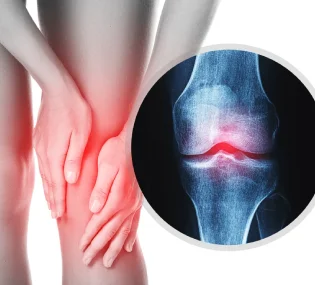
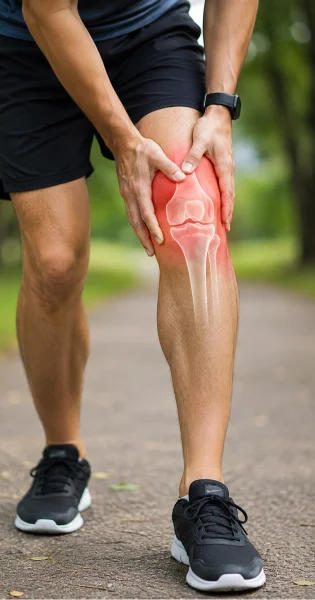
Knee osteoarthritis develops over time due to a combination of mechanical stress and the body’s natural ageing process. As cartilage loses its ability to repair and maintain itself, it becomes less effective at protecting the joint.
With reduced cushioning, movement creates more friction within the knee. This can lead to irritation. Over time, the knee may feel stiff or uncomfortable, especially during movement. Factors such as uneven weight distribution, repeated strain, and low-grade inflammation within the joint may further contribute to progression.
Rather than a single cause, knee osteoarthritis typically results from multiple factors acting together over time.
Symptoms often begin gradually and may worsen with time:
Knee pain due to cartilage loss is mechanical in nature. Your doctor should be able to predict the location of the damaged cartilage based on your symptoms and aggravating activities.
Knee osteoarthritis does not develop overnight. Instead, several factors may increase the likelihood of developing knee osteoarthritis:
This means that anyone can get knee pain. Pain is expected, but living with it is optional. You can do something about it.
Diagnosis begins with a discussion of your symptoms and how they affect daily activities, followed by a physical examination of the knee. In many cases, this initial assessment can already indicate the likely site of damage.
Imaging tests such as X-rays or MRI scans may be recommended to assess joint changes and confirm the diagnosis. An MRI is safe and does not involve any radiation. It also allows us to if there are any other pathologies which may need to be addressed.
While it cannot always be prevented, especially when related to age or genetics, certain steps may help reduce risk:
These measures can help support joint health and slow progression of disease.
Treatment focuses on relieving symptoms, improving mobility, and maintaining quality of life.

You should consider medical evaluation if you experience:
Early assessment allows for better symptom control and improved long-term outcomes.
Remember, a neglected knee problem will become a bilateral problem with enough delay. The other knee cannot continue to do double duty indefinitely.
Early signs often include mild knee pain during movement, stiffness after rest, and slight swelling. These symptoms may come and go before becoming more noticeable over time.
Pain is commonly felt along the inner side of the knee, but it can also affect the front or outer part depending on which area of the joint is involved. Some people describe a deep, aching discomfort rather than sharp pain. Some will only notice it after activity & swelling are also indicators of damage.
This is often due to joint stiffness. When the knee stays in one position, the joint fluid becomes less evenly distributed. Movement helps “loosen” the joint, which is why it may feel stiff at first but improves slightly after walking.
High-impact activities such as running, jumping, or deep squatting may place additional stress on the knee. Low-impact exercises like walking, cycling, or swimming are generally better tolerated.
Yes. Small changes such as maintaining a healthy weight, staying active, and strengthening the muscles around the knee can reduce stress on the joint and help manage symptoms more effectively. It is also advisable to avoid prolonged squatting.
If you have ongoing knee pain or stiffness, you should consult an orthopaedic specialist, particularly one with experience in knee conditions. Orthopaedic surgeons are trained to diagnose and manage problems affecting the joints, including osteoarthritis.