

Hand and wrist fractures are common injuries that can happen after a fall, from sports, a road accident, or from direct trauma to the hand or wrist. They can also occur from a seemingly minor incident, particularly in senior patients with osteoporosis.
A fracture does not always cause an obvious deformity. Pain, swelling, bruising or difficulty moving the hand or wrist may be the first signs that something is wrong.
If you suspect you have a hand or wrist fracture, it is important to have your injury assessed by a hand surgeon. Early diagnosis and appropriate treatment can help ensure the bones are properly aligned and heal in the correct position to reduce the risk of ongoing pain, stiffness or reduced hand function.
What Are Hand and Wrist Fractures?
A fracture is a break or crack in a bone. The hand and wrist contain many small bones, so different parts can be affected depending on the type and force of the injury.
Common fractures include:
- Wrist fractures: Often involve the radius or ulna near the wrist joint.
- Scaphoid fractures: Affect one of the small bones on the thumb side of the wrist and can sometimes be difficult to detect initially.
- Finger fractures: Can affect any of the bones in the fingers and may cause pain, swelling, bruising and difficulty in moving the finger.
- Metacarpal fractures: Affect the long bones of the hand between the wrist and fingers.
- Thumb fractures: Can affect the bones or joints of the thumb and may interfere with gripping and pinching.
The type, location and severity of the fracture will determine the most appropriate treatment.
Symptoms of a Hand or Wrist Fracture
The symptoms of a fracture can vary depending on the bone involved and the severity of the injury.
Common signs include:
- Sudden pain after an injury
- Swelling around the hand or wrist
- Bruising
- Tenderness when touched
- Difficulty moving the wrist, hand or fingers
- Pain when gripping or putting weight through the hand
- A finger or wrist appearing crooked or deformed
- Reduced strength
- Numbness or tingling
- Difficulty using the hand normally
You may still be able to move your hand or wrist even if a bone is fractured, so movement alone does not rule out a fracture.
Diagnosis of Hand and Wrist Fractures
After an injury, you may first be assessed at an Urgent Care Centre or Emergency Department, particularly if the injury is severe or there is significant pain, swelling or difficulty moving the hand or wrist. You may then be referred to a hand surgeon for further assessment and treatment. Your doctor or hand surgeon will examine your hand or wrist and ask how the injury happened. They may assess swelling, tenderness, movement, strength, circulation and sensation.
X-Ray
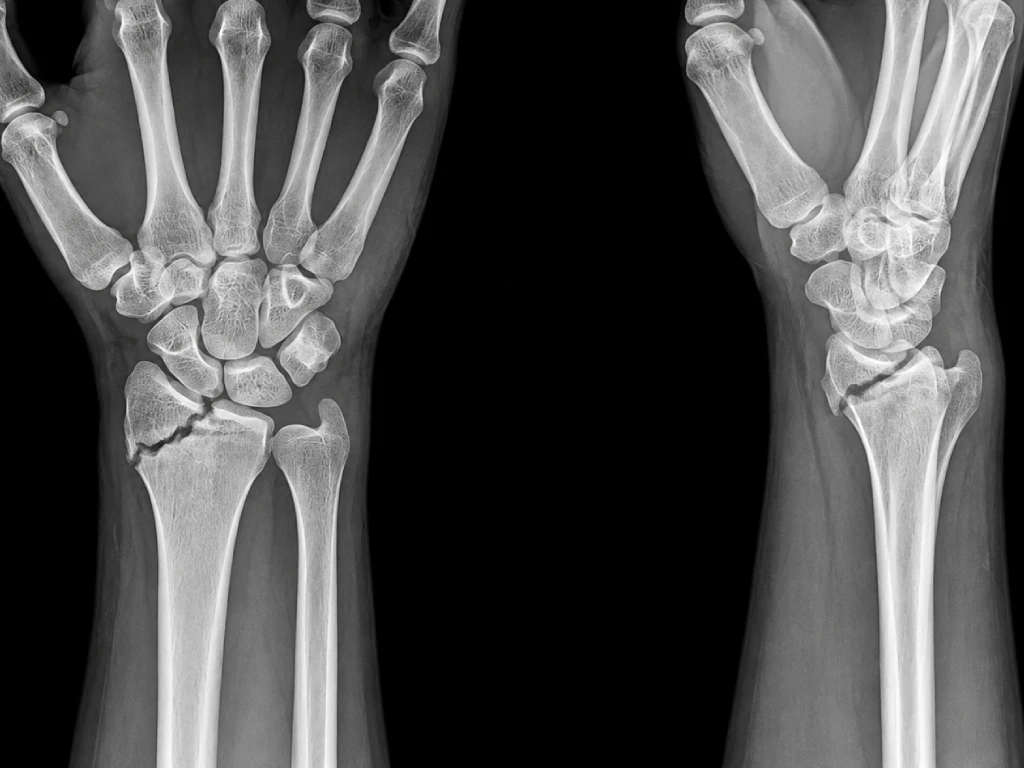
An X-ray is commonly used to identify fractures and assess the position and alignment of the bones.
CT or MRI Scans
Some fractures, such as scaphoid fractures, may not be visible on an initial X-ray and may require further imaging or follow-up. A CT or MRI scan may be recommended when a more detailed assessment is needed or when a fracture is suspected despite appearing normal on the initial X-ray.
Treatment for Hand and Wrist Fractures
Treatment depends on the location and severity of the fracture, whether the bones have moved out of position, whether a joint is involved and your overall health and functional needs. A hand surgeon can assess your injury and recommend the most appropriate treatment, whether this involves a splint or cast, fracture reduction, or surgery.
Splint or Cast
Some stable fractures can be treated without surgery. A splint or cast may be used to keep the affected area still and protected while the bone heals. The type and duration of immobilisation will depend on the fracture and how well it is healing.
Fracture Reduction
If the broken bones have shifted out of their normal position, they may need to be realigned. This is known as a reduction and may be performed before the hand or wrist is immobilised. Other fractures may require surgical realignment to restore proper alignment and stability.
Surgery
Some hand and wrist fractures require surgery to restore the alignment and stability of the bones. This may be considered when a fracture is significantly displaced, unstable, involves a joint or is unlikely to heal properly with immobilisation alone.
A hand surgeon can also assess for associated injuries to the nerves, blood vessels, tendons, ligaments, and other soft tissues. When needed, specialist reconstructive and microsurgical techniques can be used to repair these structures and restore as much function as possible.
Rehabilitation
After the fracture has healed sufficiently, hand or wrist exercises and rehabilitation may be recommended to restore movement, strength and function.
What Should I Do If I Think I Have Broken My Hand or Wrist?
If you suspect a fracture, avoid using the injured hand or wrist unnecessarily and keep it supported while seeking medical attention.
You can also:
- Remove rings or tight jewellery before swelling increases
- Keep the injured area elevated where possible
- Apply a cold pack wrapped in a cloth to help reduce swelling
- Avoid trying to straighten a visibly deformed finger or wrist yourself
Seek urgent medical attention if the hand or fingers become numb, pale, blue or unusually cold, or if there is significant bleeding or an open wound near the fracture.
When Should I See a Doctor?
Not all fractures are obvious, and some injuries may initially seem minor. If you have ongoing pain, swelling, tenderness or difficulty using your hand or wrist after an injury, it is important to have it assessed.
A hand surgeon can examine the injury, arrange appropriate imaging where needed, and recommend the most suitable treatment. This may include a splint or cast, fracture reduction, or surgery depending on the type and severity of the fracture.
If you are concerned that you may have fractured your hand or wrist, an early assessment can help ensure the injury is treated appropriately and support the best possible recovery.
Book an AppointmentFrequently Asked Questions (FAQ)
A broken wrist may cause pain, swelling, bruising and difficulty moving the wrist after an injury. An X-ray or other imaging may be needed to confirm a fracture.
Yes. Being able to move your hand or wrist does not rule out a fracture, as some fractures may still allow limited movement.
Many wrist fractures take several weeks to heal, but recovery varies depending on the type and severity of the fracture and the treatment required.
No. Some stable fractures can heal with a cast or splint, while displaced, unstable or complex fractures may require surgery.
Keep the injured hand or wrist supported, avoid unnecessary movement and remove rings or tight jewellery before swelling increases. Seek medical assessment to determine whether a fracture is present.
If you have a suspected or confirmed hand or wrist fracture, you should see a hand surgeon who specialises in hand and wrist conditions. A hand surgeon can assess the fracture, arrange any necessary imaging, and recommend the most appropriate treatment based on the type and severity of the injury.
Dr Janice Liao is a Senior Consultant Hand Surgeon at Island Orthopaedics, providing specialist and personalised care for hand and wrist conditions, including fractures and other hand injuries.