

Persistent joint pain can make everyday activities such as walking, climbing stairs, reaching overhead or getting out of a chair difficult. Over time it can also disturb your sleep and narrow the things you are willing to do.
Most joint problems can be managed without an operation. Joint replacement is considered when pain and loss of function continue despite non-surgical treatment, and when they are affecting your quality of life.
This page explains how we assess a painful joint, what we try before surgery, what joint replacement involves and what recovery is realistically like. If you have already been told you may need a joint replacement, the section on what to expect is probably the most useful place to start.
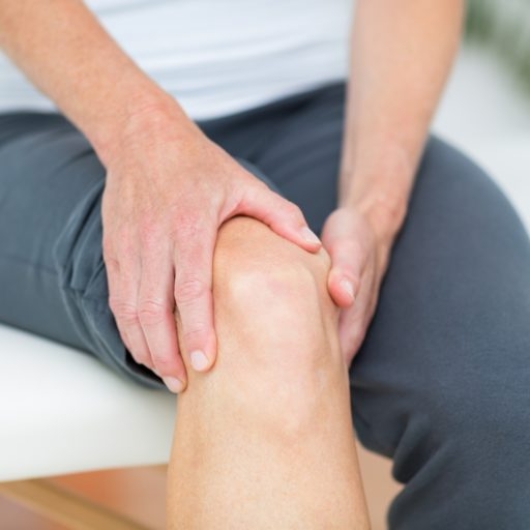
Conditions That May Lead to Joint Replacement
Joint replacement is usually considered when the cartilage lining a joint is worn or damaged beyond repair. The most common underlying causes are:
- Osteoarthritis — "wear and tear" arthritis, in which the smooth cartilage lining the joint gradually thins. This is by far the most common reason for joint replacement.
- Rheumatoid and other inflammatory arthritis — conditions in which the immune system attacks the joint lining, causing pain, swelling and, over time, damage to the joint surface.
- Post-traumatic arthritis — arthritis that develops months or years after a fracture, dislocation or significant ligament injury.
- Avascular necrosis (AVN) — loss of blood supply to a segment of bone, which can cause it to collapse. It most often affects the hip and the shoulder.
- Painful or failed previous surgery — including implants that have loosened or worn over time, where revision surgery may be considered.
Not every one of these needs a replacement. Many are managed successfully with medication, physiotherapy, injections or joint-preserving surgery.
Assessment, Tests & Care Options
Joint replacement is a significant decision. The assessment is designed to establish whether it is the right one for you, and when.
- Your history — how long you have had symptoms, what makes them worse, how far you can walk, whether pain wakes you at night, and what you would most like to be able to do again.
- Examination — the range of movement in the joint, its alignment and stability, how you walk, and the joints above and below.
- X-rays — taken standing wherever possible. Weight-bearing films show how much cartilage has genuinely been lost; X-rays taken lying down can underestimate it.
- MRI or CT — used selectively, for example to assess soft tissues, avascular necrosis, or bone stock before a complex or revision procedure.
- Blood tests — where an inflammatory or infective cause needs to be excluded.
We will explain what the findings mean, what your options are and what each would involve. You are welcome to bring a family member to the consultation.
What We Try Before Surgery
For most patients, non-surgical treatment is the starting point — and often it is enough.
- Activity modification — adjusting, rather than abandoning, the activities that aggravate the joint.
- Weight management — even a modest reduction meaningfully lowers the load passing through the hip and knee.
- Physiotherapy and strengthening — targeted work on the muscles supporting the joint can improve both pain and function.
- Pain relief — simple analgesia, anti-inflammatory medication where appropriate, and topical preparations.
- Injections — an intra-articular hyaluronic acid or corticosteroid injection may give a period of relief, and can help confirm where the pain is coming from.
- Walking aids, footwear and bracing — a stick used correctly, or an offloading brace, can reduce load and restore confidence.
Surgery is considered when these measures no longer give adequate relief — not simply because a scan looks abnormal.
Surgery That Preserves Your Own Joint
Not every joint problem needs a replacement. Where the damage is limited or confined to one area, procedures that preserve your own joint may be more appropriate.
- Arthroscopy (keyhole surgery) — a camera and fine instruments used through small incisions to treat specific problems such as a mechanical block from a torn meniscus or a loose body.
- Osteotomy — realigning bone to shift load away from the worn part of the joint. Most often used in younger, active patients whose damage is confined to one side of the knee.
- Cartilage restoration — surgical methods such as microfracture, which is a marrow stimulation technique for focal chondral defects, and/or augmented osteo-chondroplasty combining bone-shaping/repair work with biological or structural enhancements, such as scaffolds, membranes, or cell concentrates to improve healing
- Synovectomy — removing inflamed joint lining, usually in inflammatory arthritis.
- Arthrodesis (joint fusion) — permanently fusing a joint to relieve pain. Generally reserved for smaller joints, or where replacement is not suitable.
Joint Replacement Options
In a joint replacement, the worn surfaces are removed and replaced with implants made of metal, ceramic and/or high-grade plastic.
- Total knee replacement — both sides of the knee joint are resurfaced.
- Unicompartmental (partial) knee replacement — only the worn compartment is replaced, preserving your own ligaments and the rest of the knee. Suitable for selected patients.
- Total hip replacement — the worn ball and socket are replaced.
- Total shoulder replacement — for shoulder arthritis where the rotator cuff is intact.
- Reverse total shoulder replacement — the ball and socket positions are reversed so the deltoid muscle powers the arm. Used where the rotator cuff is deficient.
- Total elbow replacement — less common, and used mainly for inflammatory arthritis or complex fractures in older patients.
Wrist replacement (wrist arthroplasty) — an option for selected patients who want to preserve wrist movement.
Techniques We Use
- Robotic-assisted and computer-navigated surgery — used to plan implant position and alignment before and during the operation.
- Muscle-sparing approaches — techniques that work between muscle planes rather than detaching muscle.
- Cemented and cement-less implants — selected according to bone quality, age and activity level.
- Enhanced recovery pathways — mobilising on the day of surgery or the morning after, multimodal pain relief, and a shorter hospital stay where appropriate.
Your Journey, Step by Step
Knowing the sequence in advance makes the process considerably less daunting.
- First consultation — assessment, X-rays and a discussion of your options. Nothing needs to be decided on the day.
- Planning — any further imaging and blood tests, plus a review of your general health, medications and dental health. Your fitness for anaesthesia is assessed.
- Preparation — strengthening beforehand, optimising weight and blood sugar where relevant, and stopping smoking. All of these measurably improve recovery.
- Day of surgery — most joint replacements are performed under spinal or general anaesthesia, often combined with a nerve block. The operation itself commonly takes one to two hours.
- In hospital — you will attend to by the physiotherapist and usually be helped to stand and walk on the day of surgery or the following morning
- First six weeks — walking with a frame or stick, progressing as comfort allows. Physiotherapy is central during this period. Swelling and warmth around the joint are normal and settle gradually.
- Six weeks to three months — most patients are walking without aids and back at desk-based work. Driving usually becomes possible once you are off strong pain relief and can perform an emergency stop comfortably.
- Three to twelve months — continued gains in strength, stamina and confidence. Most patients feel they have the full benefit of the operation by around a year.
- Follow-up — reviews at set intervals after surgery, then periodic checks to monitor the implant over the long term.
Timelines are a general guide. Your own recovery will depend on the joint involved, the technique used and your general health.
Risks, and How We Reduce Them
Joint replacement is a well-established operation with a good safety record, but like any surgery it carries risks. These risks will be discussed with you fully before you consent.
- Infection — uncommon, but serious when it occurs. Reduced by antibiotics, sterile theatre protocols and by optimising your health beforehand.
- Blood clots in the leg or lung — reduced by early mobilisation, calf pumps and blood-thinning medication where indicated.
- Stiffness — most often after knee replacement. Usually managed with physiotherapy; occasionally a further procedure, such as manipulation under anaesthesia, is needed.
- Ongoing pain or disappointment with the result — a minority of patients do not get the improvement they hoped for, which is why expectations are discussed carefully beforehand.
- Dislocation and leg length difference — specific to hip replacement and minimised by careful implant selection and positioning.
- Nerve or blood vessel injury — uncommon.
- Fracture around the implant — older, osteoporotic patients are at higher risk.
- Wear, loosening and revision — implants do not last forever. Some patients will need revision surgery later in life.
- Anaesthetic risks — assessed and discussed with you by your anaesthetist before surgery.
If you have concerns after surgery, contact the clinic. Early review is straightforward; problems left late are harder to treat.
MediSave, Insurance and Written Estimates
Cost is often the practical barrier rather than the clinical decision, so it is worth addressing directly.
- MediSave — may be used towards the cost of surgery, up to the withdrawal limits set for the procedure.
- MediShield Life — provides basic coverage for your treatment. An Integrated Shield Plan with a private hospital rider covers a greater proportion of care with a specialist in private practice.
- Pre-authorisation — most insurers require approval for claims to be made from your insurance plan before an elective procedure. Our clinic staff will help you submit this and obtain a Letter of Guarantee where applicable.
- Written estimate — you will receive an itemised cost estimate covering surgeon, anaesthetist, implant, hospital and physiotherapy costs before procedure or treatment date is confirmed.
- Corporate and international insurance — we can liaise directly with most major insurers.
When to Consider Specialist Advice
You may benefit from seeing a specialist if you:
- Have persistent joint pain despite treatment
- Find it difficult to walk or climb stairs
- Have significant joint stiffness, or reduced movement and function
- Have pain that regularly interrupts your sleep
- Are giving up activities you used to enjoy
- Have advanced arthritis diagnosed on imaging
- Have joint damage following an injury or fracture
- Joint replacement is typically considered only once non-surgical treatment is no longer providing relief.
Seek medical attention promptly if a joint becomes suddenly hot, swollen and very painful — particularly with fever — or if you cannot put weight on a limb after an injury.
Book an AppointmentCommon Questions
No. Many people manage well with medication, physiotherapy, exercise, weight management or injections. Replacement is considered when symptoms are severe and continue to affect daily life.
Most commonly the knee and the hip. Shoulder, elbow and wrist replacements are also performed, in more selected circumstances.
Long-term registry data shows that most modern hip and knee replacements are still functioning well two and one decade after respective surgery, and a substantial proportion last longer than this. Durability depends on your age at surgery, activity level, weight, bone quality and the type of implant used.
Some patients are suitable for shorter-stay pathways. Length of stay depends on the joint involved, your general health and your home circumstances. Having said this most patients usually discharge on the second or third post-operative day.
Usually on the day of surgery or the following morning, with a frame or a stick. Most patients are walking without aids within about six weeks.
Typically around four to six weeks, once you are off strong pain relief and can perform an emergency stop comfortably. It is worth confirming the position with your motor insurer.
Desk-based work is often possible at around four to six weeks. Work involving prolonged standing, lifting or climbing usually takes closer to three months.
Short flights are usually reasonable after a few weeks. Long-haul travel is normally deferred for around six weeks because of the risk of blood clots. Tell us your travel plans before surgery so timing can be planned around them.
Sometimes. Doing both at once means one anaesthetic and one recovery period, but it is more physically demanding and is only appropriate for selected patients in good general health.
Walking, swimming, cycling, golf and doubles tennis are generally well tolerated. High-impact running and contact sport are usually discouraged. Kneeling after a knee replacement is often uncomfortable, even when the joint is otherwise working well — this is worth knowing before surgery rather than after.
That is a legitimate choice. We will continue to manage your symptoms non-surgically, and the decision can be revisited whenever you wish.
Our Specialist

Dr Lai Kah Weng
Consultant Orthopaedic Surgeon Dr. Lai Kah Weng is a former Flight Surgeon, Aviation Medicine, Republic of Singapore Airforce. He specialises in sports injuries of the knee, shoulder, ankle and hip joints as well as osteoarthritis of the knee and hip joints