
Perhaps they switched off your alarm, brushed your teeth, typed a few messages, prepared breakfast, carried a bag, or opened a stubborn jar. And the day has only just begun.
Our hands and wrists are involved in almost everything we do, yet we rarely think about them until something starts to hurt.
While a little soreness after an unusually busy day may settle with rest, symptoms that persist or keep coming back may be a sign of something more. Numbness that wakes you at night, a finger that suddenly locks, or a lump that appears on your wrist are all signals worth paying attention to.
So, what might your hands be trying to tell you?
Your Hands Work Harder Than You Think
Your hands and wrists contain bones, joints, muscles, tendons, nerves, and ligaments that work together every time you grip, lift, type, twist, or reach.
That's a lot happening every day.
Common symptoms may include:
- Pain or tenderness in the hand or wrist
- Numbness or tingling
- Stiffness or swelling
- Weakness when gripping objects
- Clicking, catching or locking of a finger
- Difficulty moving the hand, wrist or fingers
- A lump around the hand or wrist
The location of your symptoms, and the activities that trigger them, can provide useful clues about the cause of your hand or wrist pain.
Common Hand and Wrist Problems to Know
1. Numb or Tingling Fingers? It Could Be Carpal Tunnel Syndrome
Have you ever woken up with a numb or tingling hand?
Carpal tunnel syndrome occurs when the median nerve becomes compressed as it passes through a narrow passage in the wrist known as the carpal tunnel.
Common symptoms include tingling, numbness, pain, or weakness in the thumb, index finger, middle finger, and part of the ring finger. Many people notice their symptoms more at night or during activities that involve repetitive hand and wrist movements.
As the condition progresses, grip strength and fine hand movements may become affected.
If you frequently find yourself shaking out your hand to relieve numbness or tingling, it may be worth having your symptoms assessed.
2. Is Your Finger Clicking or Getting Stuck? Think Trigger Finger
A finger should usually bend and straighten smoothly. With trigger finger, it may catch, click, or even lock when you try to move it.
You may also experience soreness or tenderness at the base of the affected finger.
Trigger finger occurs when a tendon cannot glide smoothly through the tissue surrounding it, making movement more difficult.
At first, the occasional click may seem like a minor annoyance. But if symptoms become more frequent or start interfering with everyday activities, it may be time to have them assessed.
3. Pain Near Your Thumb? It May Be De Quervain's Tenosynovitis
Picking up a baby looks simple until you consider how often a parent does it each day.
Lift. Carry. Feed. Reposition. Repeat.
These everyday motions can place strain on the thumb side of the wrist. For some parents, particularly new mothers, this may contribute to de Quervain's tenosynovitis, sometimes known as mother's wrist.
The condition affects the tendons near the base of the thumb and can cause pain, tenderness, or swelling along the thumb side of the wrist. You may notice discomfort when lifting a child, gripping objects, or moving your thumb.
While commonly associated with new parents, de Quervain's tenosynovitis can also affect anyone whose work, hobbies, or daily activities involve repetitive thumb and wrist movements.
4. Found a Lump on Your Wrist? It Could Be a Ganglion Cyst
Not every wrist problem begins with pain.
Sometimes, the first thing you notice is a lump. A ganglion cyst is a fluid lump that can develop around a joint or tendon, commonly around the hand or wrist.
Some people with ganglion cysts on the wrist experience no discomfort at all. Others may notice pain or discomfort when moving the wrist or placing pressure on the area.
Although many ganglion cysts are harmless, it is difficult to tell what a new lump is simply by looking at it. If you notice a new lump, particularly one that is growing, changing, or becoming uncomfortable, consider having it assessed.
5. Hurt Your Hand During Sports? It May Be More Than a Sprain
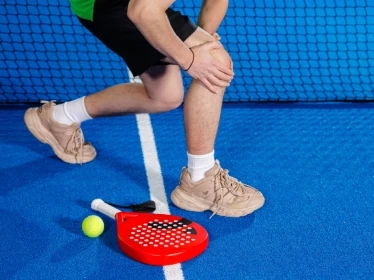
Badminton, table tennis, gym workouts and many other activities rely heavily on the hands and wrists. As a result, injuries can sometimes occur.
A fall, awkward landing, direct impact or repeated strain can affect the bones, joints, ligaments or tendons of the hand and wrist. Sometimes the injury is obviously serious. At other times, it may seem like something you can simply play through.
Pay closer attention if pain after an injury comes with significant swelling, bruising, a change in the shape of the hand or wrist, difficulty moving it, or an inability to use the hand normally.
While some injuries improve with time and rest, persistent symptoms should not be ignored, particularly if they are affecting your ability to participate in daily activities or sport.
6. Stiff and Achy Joints? Osteoarthritis May Be a Factor
As we get older, the cartilage that helps cushion our joints can gradually wear down. This can contribute to osteoarthritis. Osteoarthritis of the wrist or hand may cause pain, stiffness, swelling, and reduced movement.
Interestingly, you may notice this most during very ordinary activities. Opening a container becomes harder. Turning a key feels uncomfortable. Holding objects firmly takes more effort than it used to.
These changes may develop gradually, which can make them easy to accept as part of ageing. However, persistent discomfort or loss of function should not be ignored.
Appropriate management may help control symptoms and support continued use of the hand and wrist.
When Should Hand or Wrist Pain Be Checked?
Not every ache means there is a serious problem.
Your hand can feel tired after strenuous exercise or an unusually busy day, just like other parts of your body. The bigger question is whether the symptoms improve with time or keep coming back.

Consider seeking medical advice if your symptoms:
- Keep returning, or do not improve
- Gradually become worse
- Include numbness or tingling
- Affect your grip or hand strength
- Make it difficult to move your wrist or fingers
- Cause a finger to catch or lock
- Come with persistent swelling
- Include a new or growing lump
- Affect your work, exercise, hobbies or everyday activities
- Develop after a significant injury
In other words, pay attention when changes in your hand or wrist start affecting what you can comfortably do.
Your Hands Help You Do What Matters
If your hand or wrist symptoms persist, getting them assessed by a specialist can help determine the cause and guide the most appropriate treatment.
Dr Janice Liao is a Senior Consultant in Hand and Reconstructive Microsurgery at Island Orthopaedic Centre, Singapore, with subspecialty expertise in hand and wrist conditions. She manages a range of acute injuries, sports-related injuries, nerve compression conditions and degenerative or overuse problems, including carpal tunnel syndrome, trigger finger, De Quervain’s tenosynovitis, ganglion cysts and osteoarthritis.
Whether the goal is to relieve pain, restore movement, or improve hand function, tailored treatment and compassionate care can help you get back to the activities that matter the most.
Related Doctor

Dr Janice Liao Chin-Yi(廖晉儀)
Senior Consultant Hand Surgeon FAMS (Singapore), MBBS (Australia)Related Clinic

Island Orthopaedics (Mount Alvernia Hospital)


Island Orthopaedics (Gleneagles Medical Centre)